Le Salon revisited
2026
/
Peeping Tom Production
© Marc De Ganck (2004)
From the original 'Le Salon'
ABOUT THIS PRODUCTION
About Le Salon
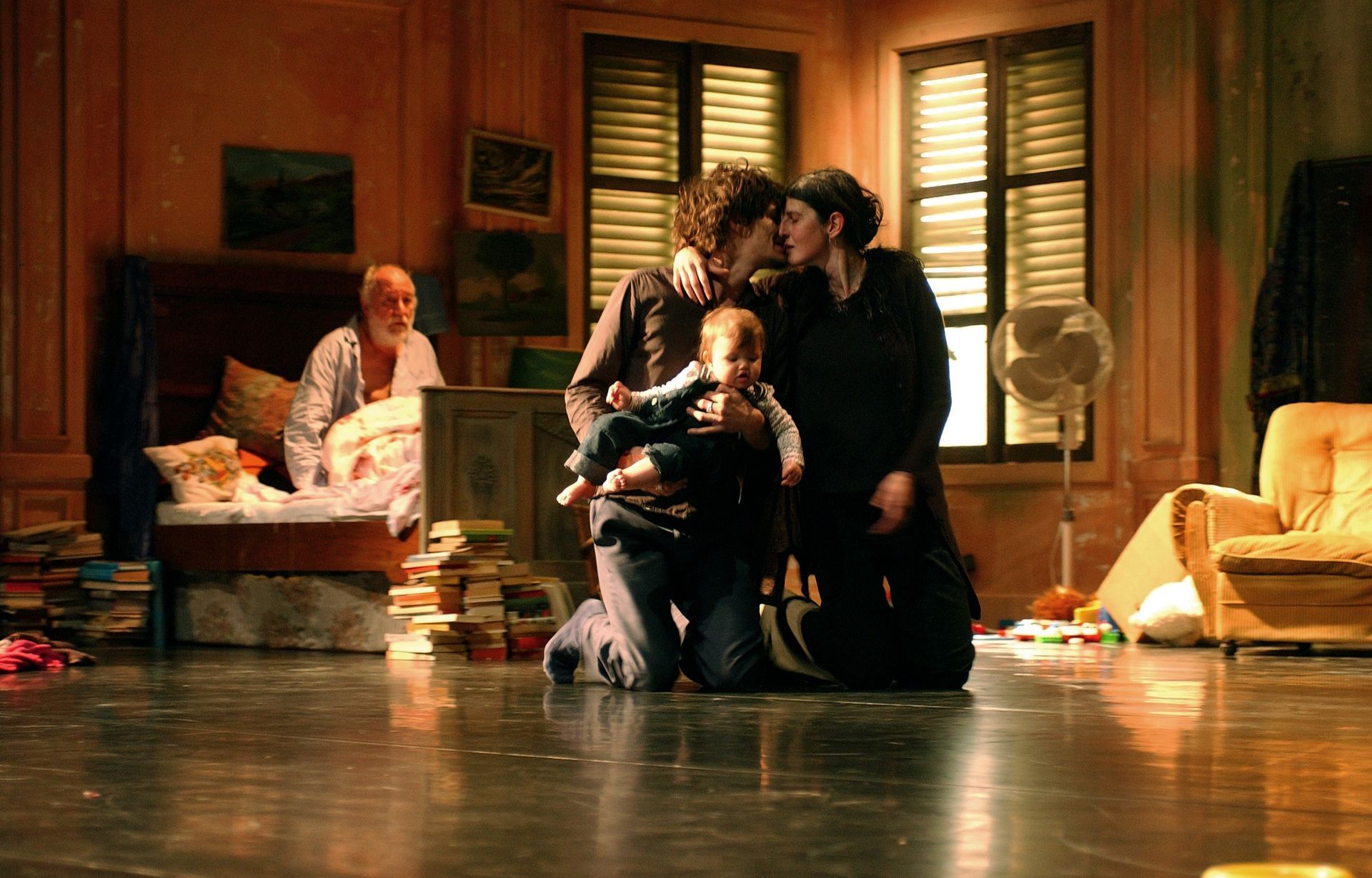
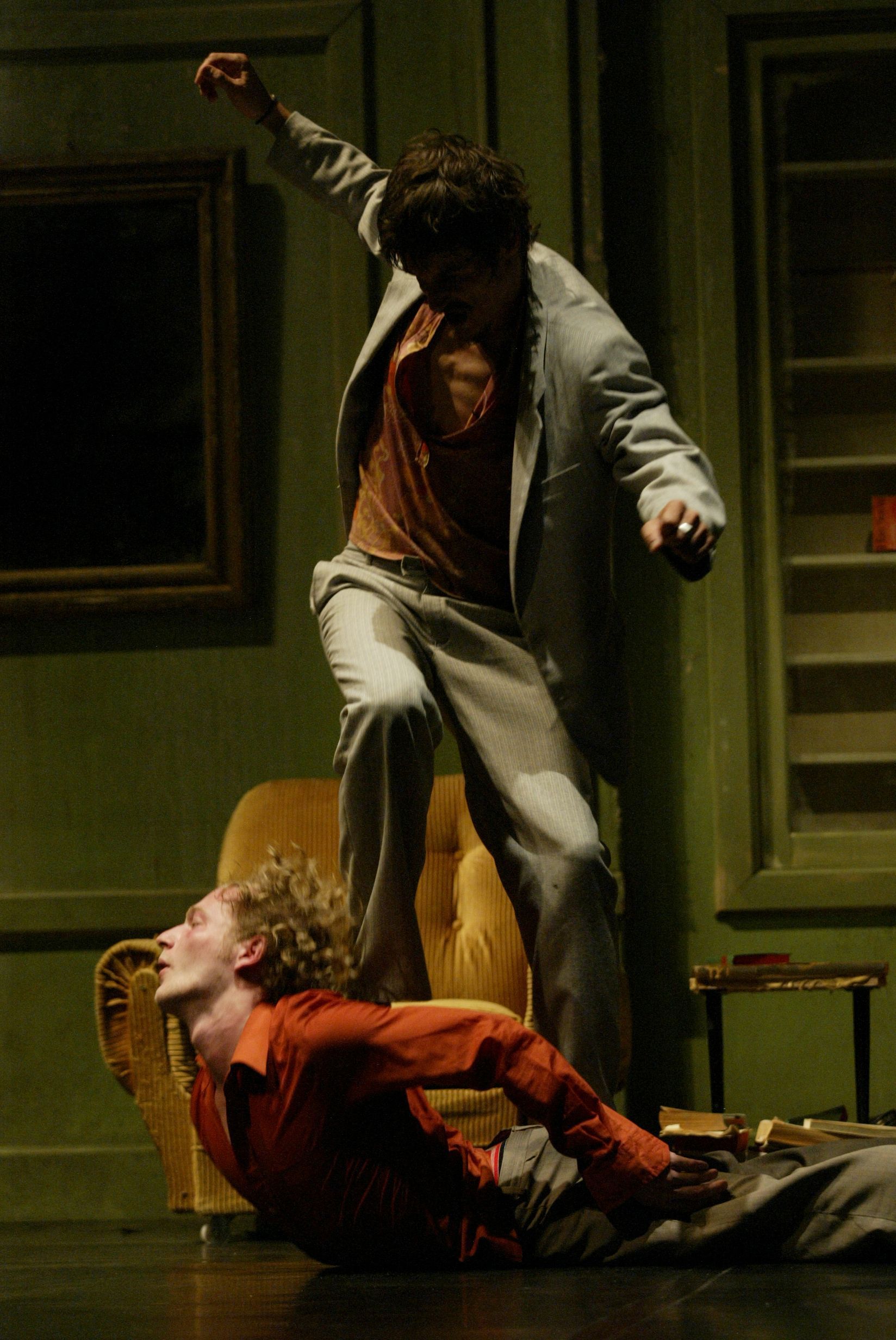
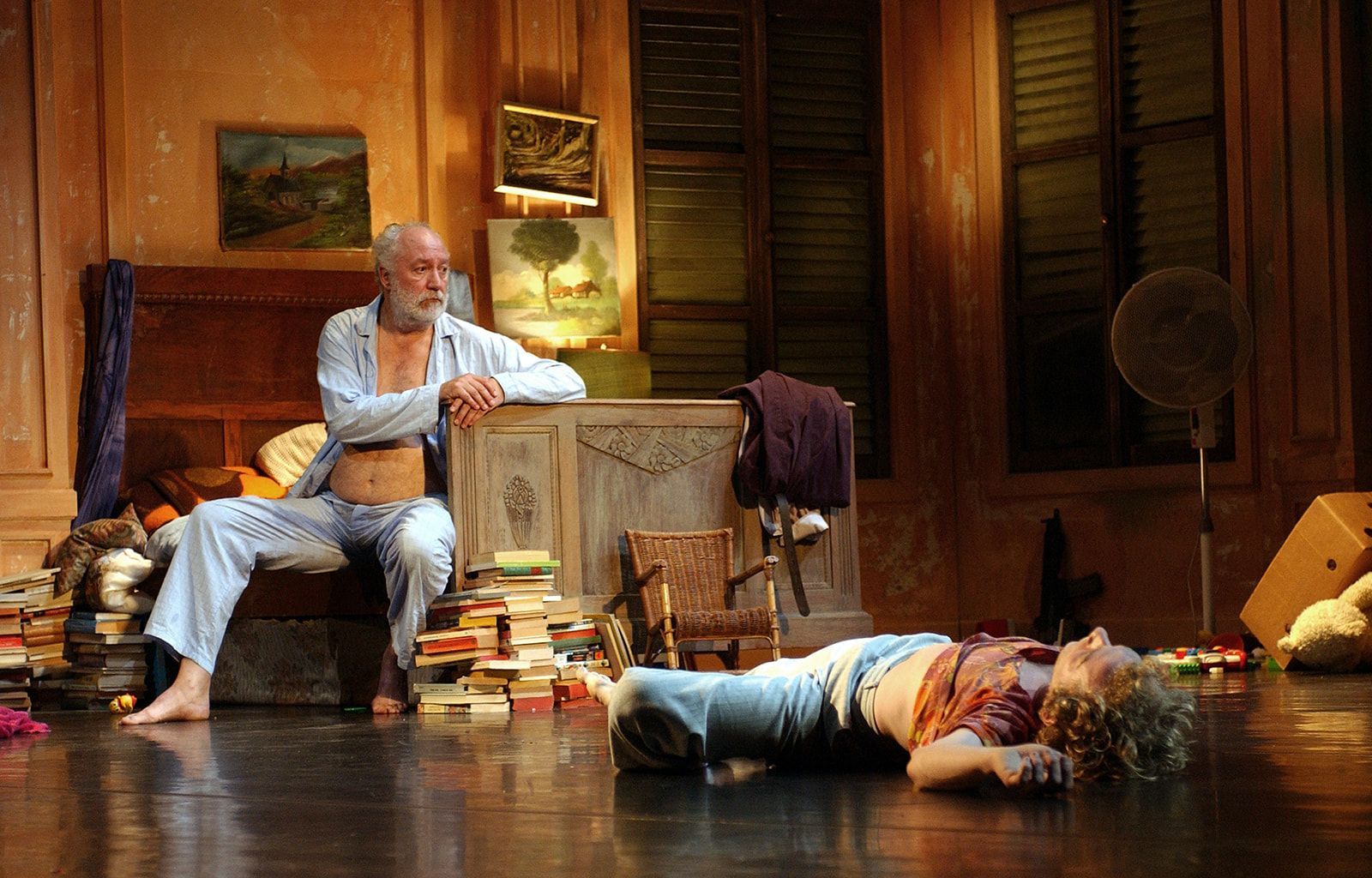
Created in 2004, Le Salon is a darkly playful portrait of a family in decline, where four generations confront loss, inherited trauma, and unspoken secrets. Now, more than 20 years later, we pay another visit to this living room that became a mirror of private and collective consciousness.
On stage, we observe a once-wealthy family struck by a financial, material, physical, and psychological decline. The performance first delves into the buried taboos between the family members. Through the simultaneous presence of four generations, the invisible inheritance, passed down from ancestor to their children, becomes tangible through movement.
This unconscious family legacy also brought the creators, as parents, back to a primal fear: the fear of losing a child. Gradually, this becomes a central axis of the project: a story of a couple who loses what is most precious to them, and exploring how they survive the aftermath. They stumble between collapse and resilience, where sorrow and unexpected laughter coexist.
Finally, the space itself plays its own role: as a silent witness, the living room is where everyday life accumulates over time. It stores gestures, routines, and conflicts that outlive their inhabitants, becoming a family archive over time.
20+ years after its creation, this salon is still building on the past and lays bare a hard question: are we learning from the past or are we endlessly repeating history?
Context
Le Salon is a contemporary dance-theatre performance that links private family dynamics to larger historical events (wars, social collapse, economic decline – hence it’s continued relevance) and it serves as a cautionary tale about the long-term impacts of human trauma.
When not addressed, these traumas (whether physical, psychological, or sexual in nature) can turn into “ghosts”. This term (first coined by psychoanalyst Selma Fraiberg in 1975) gained traction in the aftermath of the two world wars. Research showed that a trauma that becomes taboo, will eventually pass down through generations — sometimes even up to seven! These ghosts slip into seemingly harmless phrases like “Close the
curtains!”, and can unleash violent emotional storms after a trigger. Some of these wounds are not just personal; they originate in shared historical catastrophes that affect entire populations. In Le Salon, the family becomes a microcosm in which collective events are absorbed and replayed on an intimate scale.
This work sits naturally in Peeping Tom’s oeuvre, where making the unconscious conscious has become a recurring motive. In today’s political climate, with wars being launched without clear resolution, revisiting this work feels especially timely: the trauma generated now risks creating ripple effects that may shape generations to come.
We’re paying another visit to Le Salon, not only to acknowledge its enduring relevance, but also to allow new generations of artists and audiences to engage with the questions it raises. As one of the defining pieces in Peeping Tom’s 25-year history, returning to this early work is a way of letting it resonate anew in a different era, for audiences who may be encountering it for the first time.
Created collectively by the original cast in 2004, Le Salon toured
internationally from 2004 to 2009. It was presented across Europe, South Korea, and Australia, captivating audiences with its distinctive blend of theatricality, physical performance, and sharp social commentary. For many spectators, it became a defining experience.
In 2004, Le Salon was created by Simon Versnel, Eurudike de Beul, Samuel Lefeuvre, Franck Chartier, Gabriele Carrizo and Uma Chartier.
The performance draws loose inspiration from The Music Room by Satyajit Ray, which depicts the financial downfall of a prince devoted to music who stubbornly continues to host concerts in his living room as the world caves in around him.

DETAILED INFO
Concept by
Gabriela Carrizo & Franck Chartier
Re-direction by
Franck Chartier
Creation by
Gabriela Carrizo, Franck Chartier, Sam Lefeuvre, Eurudike
De Beul, Simon Versnel and Uma Chartier
Performed by
Paula Tato Horcajo/Lauren Langlois, Nelson Earl/Diego Pazo, Juliana Azevedo/Carla Vukmirovic, Pepe Jaimes/Konan Dayot, Eric Houzelot/Tony Guifoyle, Narumi Saso, Ezra/Kotora.
Light design by
Bram Geldhof / Gerd van Looy
Sound design by
Peeping Tom / Glenn Vervliet
Set design by
Pol Heyvaert
Technical creation by
Filip Timmerman
Artistic assistance
Louis-Clément da Costa